Industrial Gateways, the bridge to the cloud.
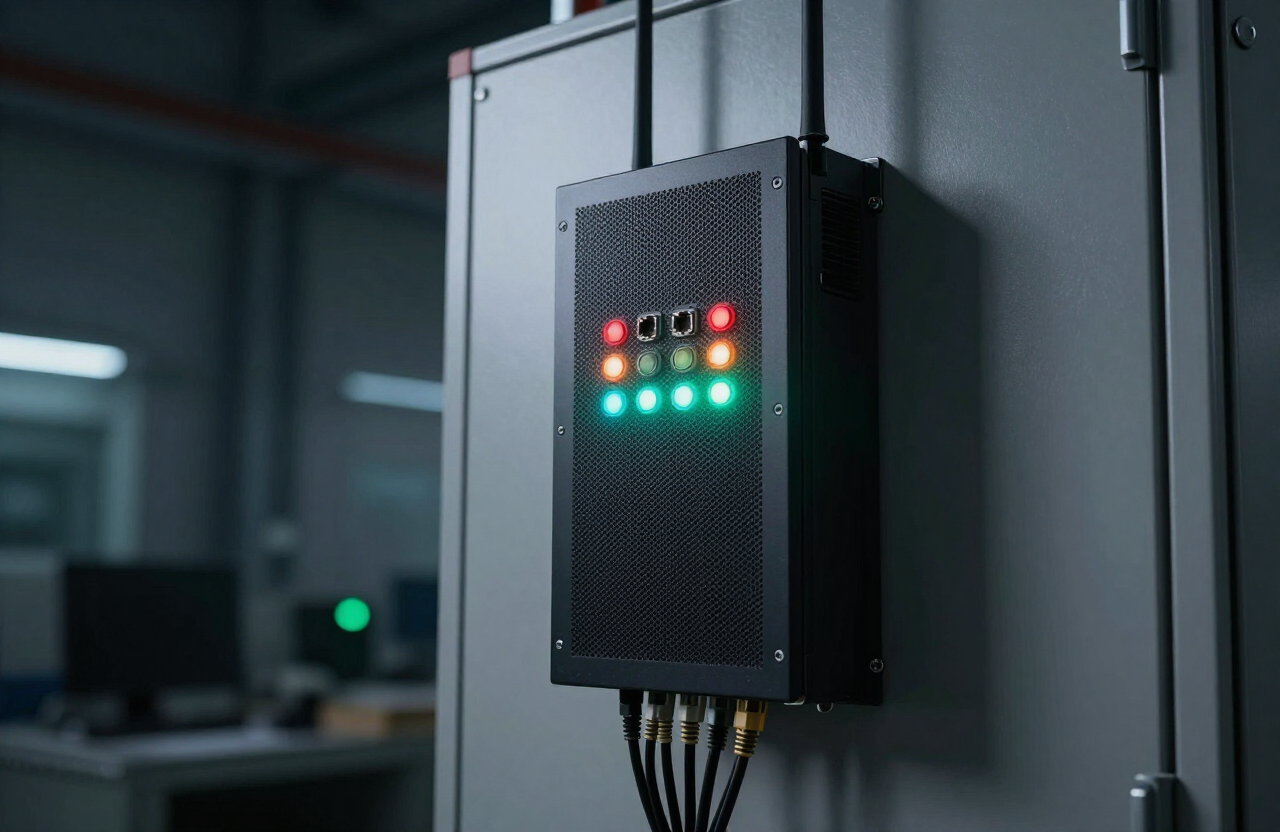
A single piece of hardware that listens to every sensor on site and forwards their readings securely to the cloud — buffering data locally if the connection ever drops.
If sensors are the ears listening to your equipment, a gateway is the mouth that reports what they heard back to head office. It sits somewhere central on site, picks up radio signals from every sensor in range, and pushes that data out over your existing internet connection.
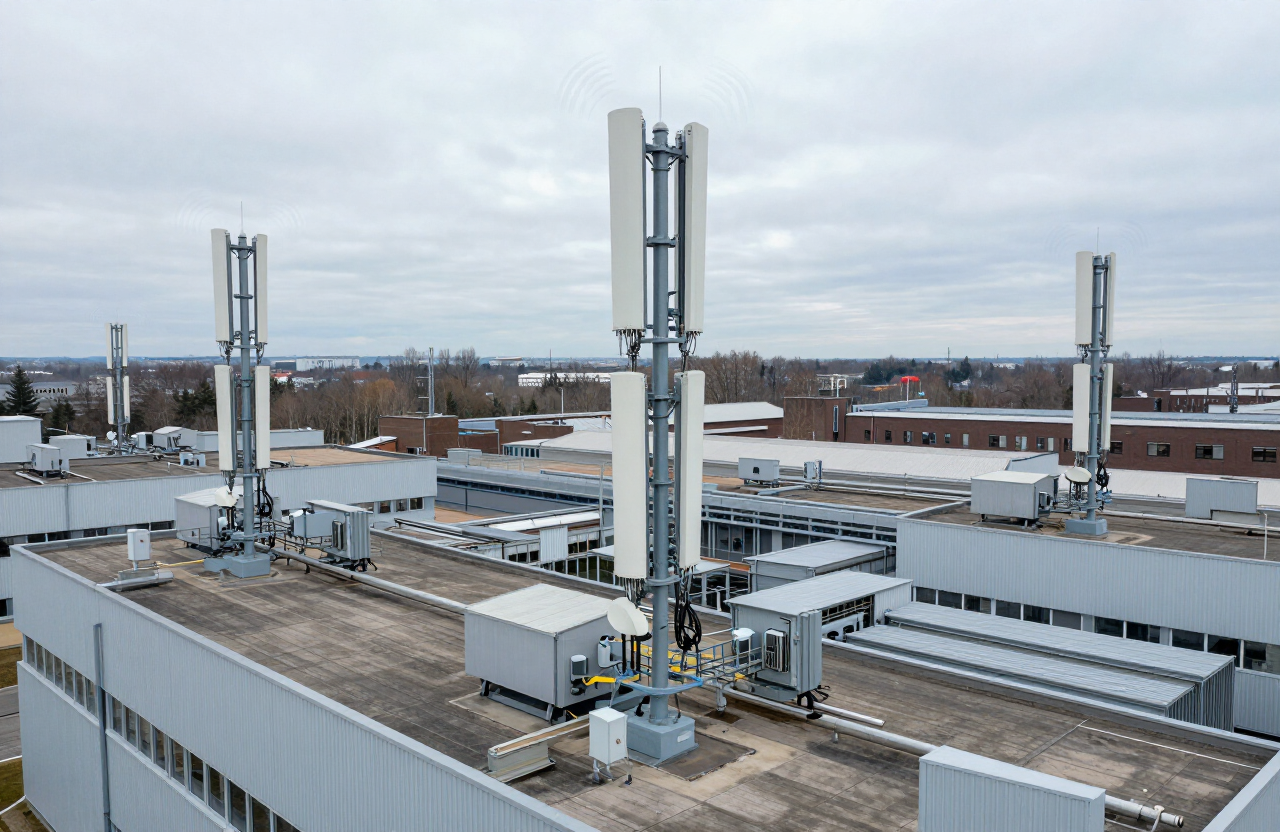
Gateways are the quiet workhorses of any deployment. One gateway can aggregate readings from thousands of sensors and forward them to the cloud platform, giving even the largest sites full coverage from a handful of installed units.
Key benefits
- One gateway typically covers an entire building or yard
- No data loss during internet outages
- Minutes to install, with no specialist wiring
- Continuous self-monitoring and health alerts
A simple diagram of the data path.
Inside the gateway's job.
Radio receiver
Listens continuously for LoRaWAN transmissions from every sensor in range
Local buffer
Stores readings temporarily if the internet connection is interrupted
Secure uplink
Forwards data to the cloud platform over an encrypted connection
Health reporting
Reports its own status so IT knows the gateway itself is healthy
Resilient by design
Industrial sites cannot afford data loss because of a flaky internet connection. Gateways buffer readings locally and resend automatically once connectivity returns, so nothing is lost.
Local buffering
Readings are held on the gateway during any outage and sent once the link recovers.
Redundant uplinks
Ethernet, Wi-Fi or cellular backup options keep a gateway online even if one path fails.
Simple to deploy, easy to scale
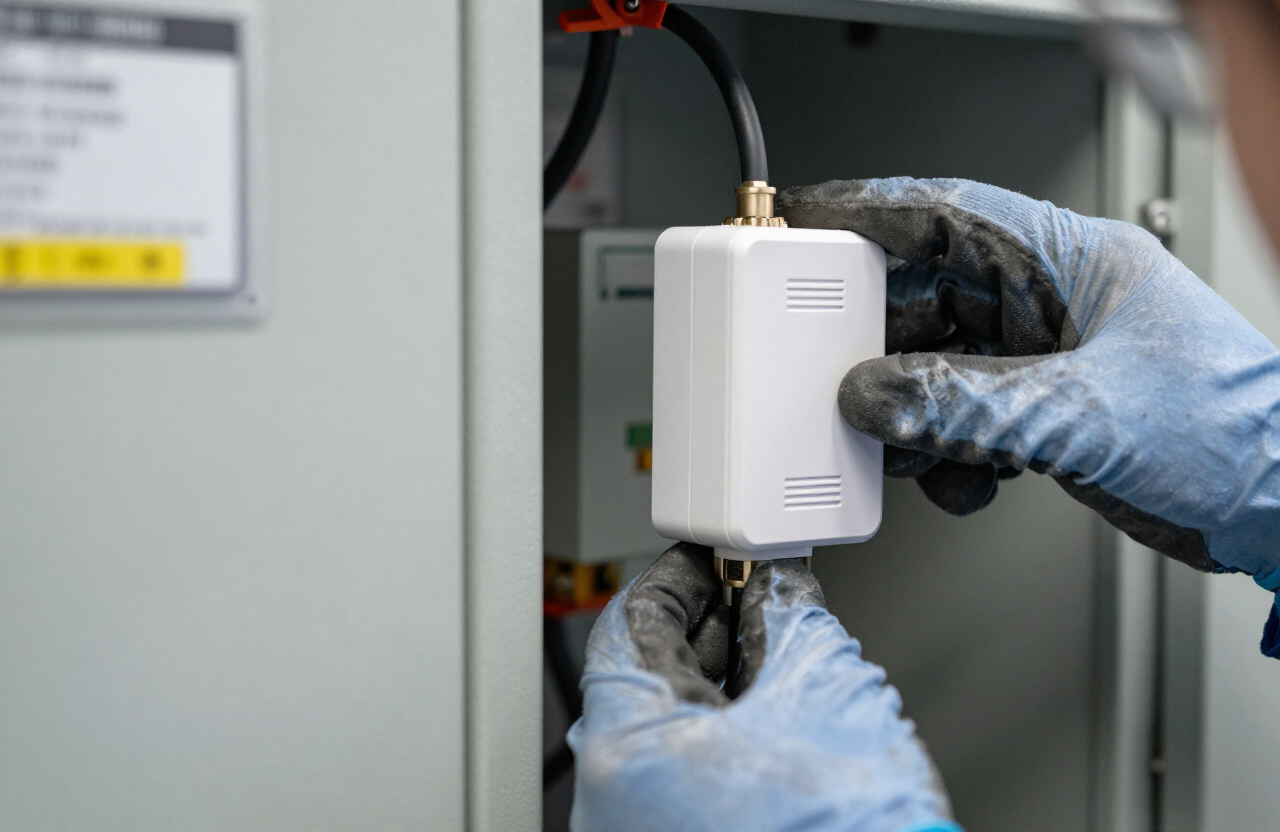
A gateway typically needs only power and an internet connection — no specialist networking equipment or dedicated IT infrastructure.
Fast installation
Most gateways are mounted and online within an hour, with no cabling to sensors required.
One gateway, thousands of sensors
Adding new sensors rarely requires adding new gateways.
Common questions
Still unsure? Our engineers are happy to talk through the detail for your estate.
All FAQsHow many gateways does a site need?
Most single buildings need just one or two; larger or more complex sites are surveyed individually during the infrastructure audit.
What if our internet goes down?
The gateway buffers readings locally and forwards them automatically once the connection returns — no data is lost.
Can a gateway work over cellular instead of broadband?
Yes, gateways can use a cellular backup or primary connection where a fixed line is impractical.
Explore what connects to this.
Ready to make your estate measure itself?
Request an infrastructure audit and we will design a LoRaWAN energy-monitoring programme built for ISO 50001 readiness across the UK and Europe.
Choose how you would like to engage our team.
Every route below reaches our UK and EU enterprise engineers directly. Pick the one that fits where you are — no obligation, response within one working day.
Common questions
An engineer reviews your metering estate and site plans, then returns a scoped monitoring proposal — typically within one working day of the initial call. There is no cost or obligation.
Send an enquiry
Tell us about your estate and we will route you to the right engineer.