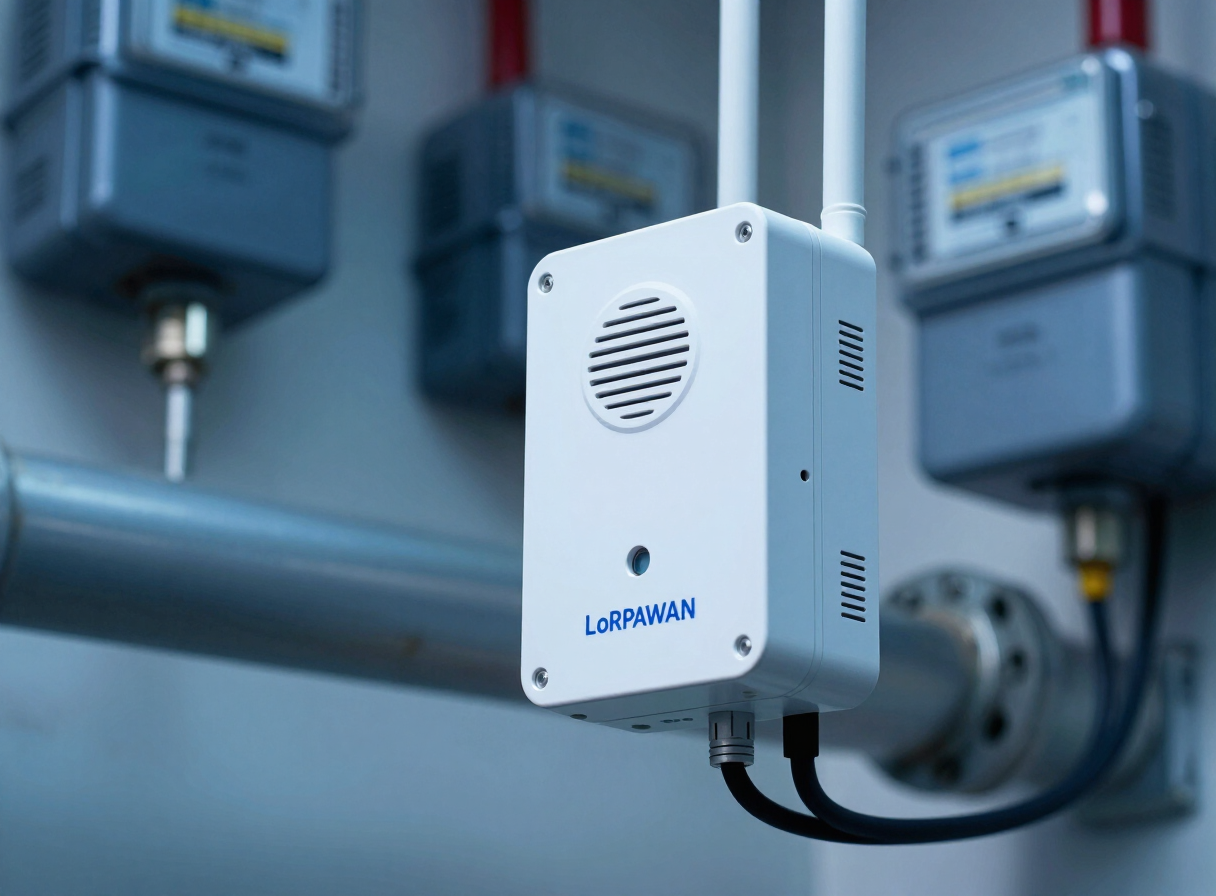
The Industrial Internet of Things (IIoT) is the network of connected sensors, gateways, communication networks and cloud platforms used to monitor, measure and optimise industrial operations. It brings the visibility of digital systems to physical assets — machines, meters, buildings and utilities.
The four layers of IIoT
A typical IIoT system has four layers. Sensors measure physical quantities at the edge. Connectivity (often LoRaWAN or cellular) carries the readings back. Gateways aggregate and forward data. A cloud platform stores, visualises and analyses it. Each layer must be reliable and secure for the whole system to deliver value.
IIoT vs consumer IoT
Consumer IoT prioritises convenience and cost. IIoT prioritises reliability, security, longevity and accuracy. Industrial sensors run for years on a battery, survive harsh environments, and produce measurement-grade data suitable for compliance and financial decisions.
Why enterprises adopt IIoT
The business case is visibility. You cannot manage what you cannot measure. IIoT provides continuous, granular data on energy, equipment health and process performance — the foundation for cost reduction, ISO 50001 certification and industrial AI.
Frequently asked questions
- What does IIoT stand for?
- IIoT stands for the Industrial Internet of Things — the connected network of sensors, gateways and platforms used to monitor and optimise industrial operations.
- How is IIoT different from IoT?
- IIoT is engineered for industrial reliability, security, accuracy and long battery life, whereas consumer IoT prioritises low cost and convenience. IIoT data is measurement-grade and suitable for compliance and financial decisions.
- What are the layers of an IIoT system?
- IIoT has four layers: edge sensors, connectivity (such as LoRaWAN), gateways that aggregate data, and a cloud platform that stores, visualises and analyses it.
Related reading

Put these ideas to work
Request an infrastructure audit and we will design a monitoring programme built around your estate and objectives.
Choose how you would like to engage our team.
Every route below reaches our UK and EU enterprise engineers directly. Pick the one that fits where you are — no obligation, response within one working day.
Common questions
An engineer reviews your metering estate and site plans, then returns a scoped monitoring proposal — typically within one working day of the initial call. There is no cost or obligation.
Send an enquiry
Tell us about your estate and we will route you to the right engineer.